Tired of Knee Pain Holding You Back?
Take our 2-minute joint health assessment to explore which non-surgical approaches may be suitable for your condition.
0
patients assessed
0/5
patient rating
0yr
of experience
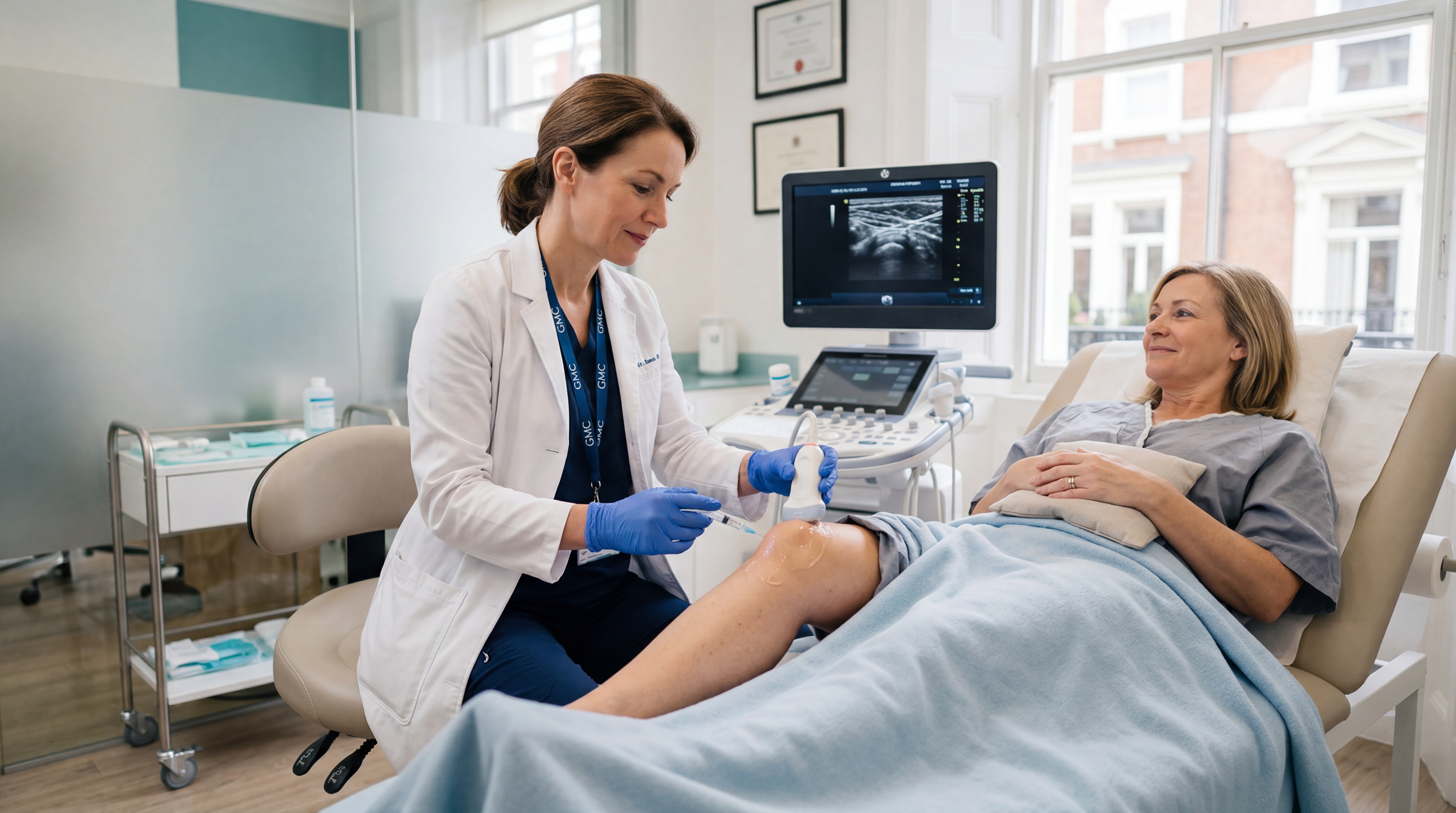
“Excellent care from start to finish. Highly recommend.”
Invest in Yourself
Achieving your health goals shouldn't be a financial burden. We offer seamless payment options tailored to your lifestyle.

Spread the cost of your treatment over 3 interest-free instalments. No fees, no interest.

Shop now and pay over 6 weeks. 4 equal payments, due every 2 weeks.

Flexible loans for treatments over £500. Competitive rates and fast decisions.
All payment options are subject to eligibility. Finance is provided by regulated third-party providers.
Find Out If Non-Surgical Treatment Could Work For You
Our assessment is built on the same validated clinical tools used by orthopaedic specialists — adapted into a 3-minute questionnaire you can complete from home.
Improvement Score
A 0-100 score based on your pain level, mobility, and treatment history
Treatment Match
See which injection therapies are most suited to your specific profile
Specialist Review
A GMC-registered specialist reviews your results within 24 hours
Based on Published Clinical Research
WOMAC Index — Gold-standard assessment used in 10,000+ clinical trials for joint pain
NRS Pain Scale — Validated 0-10 pain rating used by the NHS and WHO
Frontiers in Medicine (2024) — Compared injection therapies across 4-year follow-up
Cellular & Molecular Immunology (2023) — 12 of 15 RCTs showed positive outcomes
Question 1 of 8
0%
Where is your primary area of discomfort?
0
Assessments Completed
0
Years Experience
0
Star Rating
How It Works
From assessment to treatment plan in four simple steps
Free Assessment
Complete our 3-minute clinical questionnaire online — no obligation, completely confidential.
Specialist Review
A GMC-registered specialist reviews your assessment within 24 hours — not 28 weeks.
Consultation
Discuss your results and treatment options at our Harley Street clinic with your dedicated specialist.
Treatment Plan
Receive a personalised treatment plan tailored to your condition, goals, and lifestyle.
Free Assessment
Complete our 3-minute clinical questionnaire online — no obligation, completely confidential.
Specialist Review
A GMC-registered specialist reviews your assessment within 24 hours — not 28 weeks.
Consultation
Discuss your results and treatment options at our Harley Street clinic with your dedicated specialist.
Treatment Plan
Receive a personalised treatment plan tailored to your condition, goals, and lifestyle.
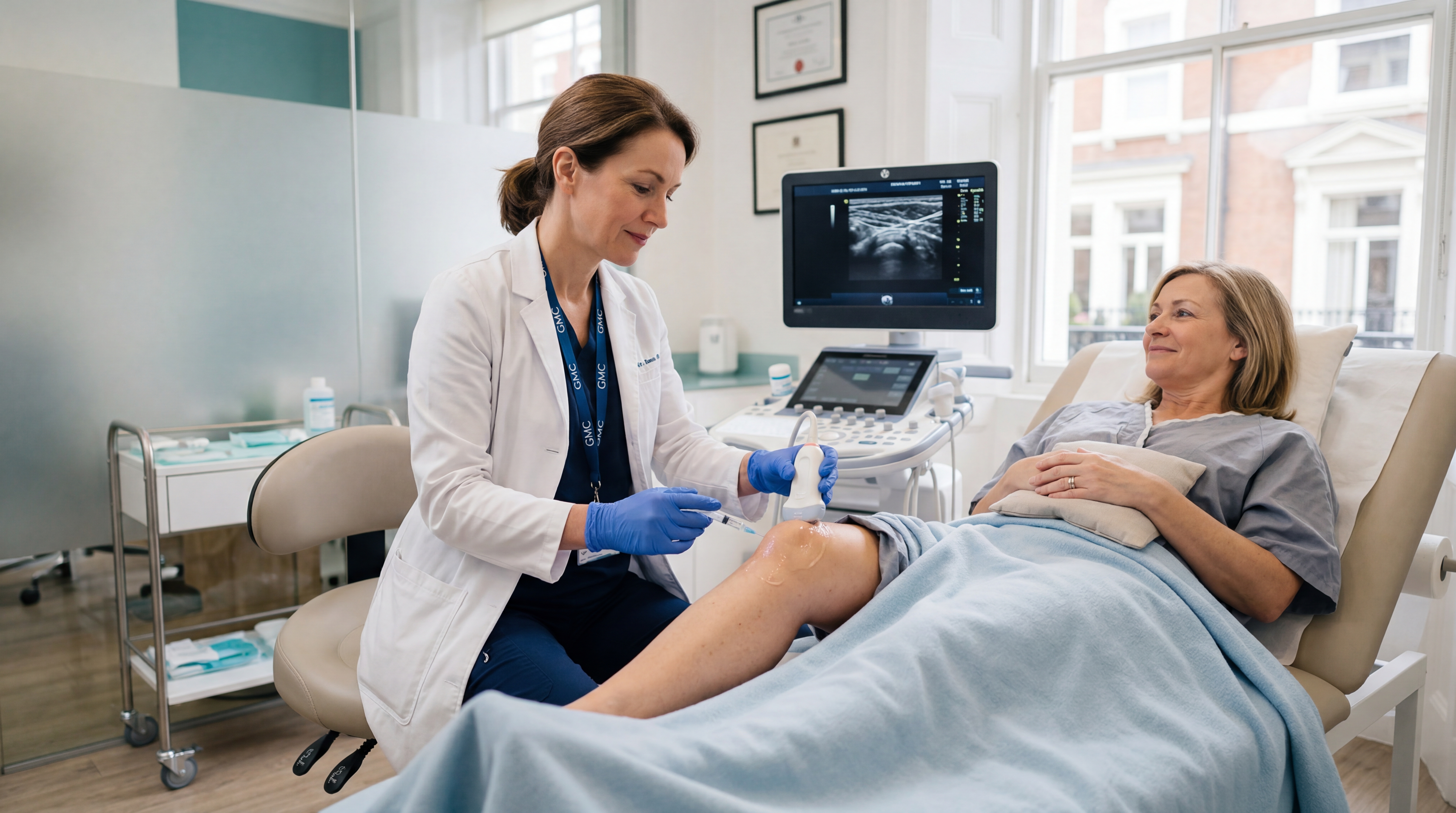
Why Joint Pain in the UK Is a Growing Challenge
The scale of the problem and what it means for your treatment options
20M+
people in the UK live with a musculoskeletal condition
Versus Arthritis, State of MSK Health 2025
28-29
weeks — average NHS waiting time for knee replacement
NHS England 2026
7.1M
working days lost to MSK conditions annually in the UK
HSE 2024/25
61.6%
of patients treated within the 18-week NHS target
King's Fund, January 2026
What Causes Knee Pain?
Each condition responds differently to treatment. Understanding yours is the first step toward the right approach.
Knee Osteoarthritis
Knee osteoarthritis is a degenerative condition characterised by the gradual breakdown of cartilage that cushions the joint surfaces.
According to NHS data, osteoarthritis affects approximately 1 in 5 adults over the age of 45 in the UK. Early symptoms typically include intermittent aching on the inner side of the knee and occasional swelling after activity. As the condition progresses, patients may experience persistent pain throughout the knee, morning stiffness lasting 30 minutes or more, a grinding or crunching sensation during movement, and visible swelling. Without intervention, cartilage continues to wear until bone-on-bone contact develops, leading to significant functional limitation, muscle atrophy around the joint, and altered gait patterns. Research published in Frontiers in Medicine (2024) compared injection therapies for knee osteoarthritis and found varying outcomes across cortisol, hyaluronic acid, and various non-surgical injection therapy approaches.
Common Symptoms
If Left Untreated
Without management, cartilage loss accelerates. Bone spurs develop, pain becomes constant, and mobility significantly decreases. Compensatory gait changes may lead to secondary problems in the hip and lower back.
Meniscus Tears
A meniscus tear involves damage to the C-shaped cartilage that acts as a shock absorber between the thighbone and shinbone.
Meniscus tears are among the most common knee injuries, with degenerative tears frequently occurring in adults over 40 and traumatic tears common in younger, active individuals. Typical symptoms include pain when twisting or rotating the knee, swelling and stiffness, difficulty fully straightening the leg, and a locking or catching sensation during movement. Many patients describe a feeling of instability, as though the knee might give way. A 2024 systematic review published in PMC examined targeted injection therapy for degenerative meniscus tears and found variable MRI outcomes but significant improvements in pain scores. Conservative management including physiotherapy is often the first approach, with surgical intervention reserved for tears that cause persistent mechanical symptoms such as locking.
Common Symptoms
If Left Untreated
Untreated meniscus tears can lead to increased cartilage wear, accelerating the development of osteoarthritis. Mechanical symptoms like locking may worsen over time.
ACL Tears
An anterior cruciate ligament (ACL) tear is a significant knee injury that commonly occurs during sports involving sudden stops, direction changes, or pivoting movements.
At the time of injury, many patients report hearing or feeling a distinct 'pop' in the knee, followed by rapid swelling, severe pain, and instability. The knee often feels as though it will give way during activities that require cutting or pivoting. ACL tears can range from partial to complete, and the choice of treatment depends on the patient's activity level, age, and the degree of instability. A 2025 randomised controlled trial published in PMC compared non-surgical treatment of ACL tears using advanced injection approaches against exercise therapy alone, with two-year follow-up data showing differing outcomes between groups. Reconstruction surgery remains common for active individuals, though non-surgical approaches are increasingly being studied.
Common Symptoms
If Left Untreated
Without treatment, ACL-deficient knees may experience recurrent instability episodes, increasing the risk of meniscus tears and accelerated osteoarthritis development.
Understanding Knee Pain: The Latest Research
Our specialists break down the published evidence on non-surgical treatments for knee pain — what works, what doesn't, and what's right for you.
Video Coming Soon
Our specialists are preparing an in-depth video explaining the latest research and treatment options for your condition.
Non-Surgical Options for Knee Pain
Evidence-based approaches available at our Harley Street clinic
Cortisone Injection
From £250Anti-inflammatory corticosteroid delivered directly into the joint to suppress inflammation and reduce pain.
Hyaluronic Acid Injection
From £350Gel-like hyaluronic acid injected into the joint to restore natural lubrication and cushioning, reducing friction and pain.
Advanced Injection Options
Discussed at ConsultationSeveral advanced injection therapies may be suitable depending on your assessment results. Discuss with your specialist.

Meet Your Specialists
GMC-registered practitioners with extensive experience in non-surgical joint treatments

Dr. Ahmad
Medical Director
As Medical Director of Harley Street Wellness, Dr. Ahmad oversees all clinical operations and treatment protocols. With extensive experience in musculoskeletal medicine, he leads the team in delivering evidence-based, non-surgical joint treatments. He is passionate about helping patients explore alternatives to surgery and ensuring every treatment plan is grounded in the latest published research.

Dr. Humaira Faisal
Wellness Physician
Dr. Humaira Faisal brings a patient-centred approach to joint health, combining thorough clinical assessment with compassionate care. She specialises in evaluating complex joint conditions and developing personalised treatment plans that prioritise quality of life. Her patients value her ability to explain medical options clearly and help them make confident, informed decisions.

Dr. Ayda Soltanzadeh
Wellness Consultant
Dr. Ayda Soltanzadeh specialises in musculoskeletal wellness and non-surgical intervention planning. With a meticulous approach to diagnostics and treatment design, she ensures every patient receives a tailored care pathway. She is known for her thorough consultations and her commitment to staying at the forefront of evidence-based joint treatments.

Dr. Mazhar Khan
Senior Wellness Consultant
With over 23 years of clinical experience, Dr. Mazhar Khan is one of the most experienced practitioners at Harley Street Wellness. His extensive background in musculoskeletal medicine and injection therapy means patients benefit from a wealth of knowledge across a wide range of joint conditions. He has a particular interest in sports-related injuries and age-related joint degeneration.
All practitioners are GMC-registered and practice from our Harley Street clinic
What Our Patients Say
Real experiences from patients who visited our Harley Street clinic
The consultation was incredibly thorough. The specialist took time to explain every option available to me, and I never felt pressured into any particular treatment.”
James T.
Verified Patient
Individual experiences may vary.
I appreciated the honest, evidence-based approach. They clearly explained what the research shows and what it doesn't, which helped me make an informed decision.”
Sarah M.
Verified Patient
Individual experiences may vary.
The assessment process was straightforward and professional. The team made sure I understood my condition fully before discussing any next steps.”
David R.
Verified Patient
Individual experiences may vary.
Rated 4.9/5 from 200+ verified patient reviews
Find Us in London
Two convenient locations in the heart of London's prestigious medical district


Based on 200+ verified patient reviews on Google
Visit Our Clinics
All consultations and treatments at Harley Street Wellness are carried out by GMC-registered doctors with specialist training in musculoskeletal medicine and evidence-based approaches.
London W1G 9PFPortpool Lane Clinic1-5 Portpool Ln
London EC1N 7UU
Frequently Asked Questions
Common questions about knee pain treatment options
The timeline depends on the type of injection therapy used. Cortisone injections typically provide relief within a few days and last 6-8 weeks. Hyaluronic acid injections may take 2-4 weeks to show full benefit, with results often lasting 6-12 months. Other advanced injection therapies may take 4-6 weeks for noticeable improvement, with maximum benefit typically reached at 3-6 months. Individual response varies based on the severity of joint degeneration, the specific condition being treated, and overall health factors. Your specialist will set realistic expectations based on your individual assessment.
Steroid (cortisone) injections typically provide faster initial relief, often within days, but the benefit usually lasts only 6-8 weeks and may diminish with repeat injections. A 2025 RSNA study found that steroid injections led to more knee joint damage over two years compared to control groups. Hyaluronic acid injections may take 2-4 weeks to show benefit but research suggests they provide more sustained improvement, often lasting 6-12 months. The choice between approaches depends on your individual situation — whether you need quick relief from a flare-up or longer-term joint support — and is best discussed with a specialist.
The number of sessions recommended varies based on the condition, its severity, and the type of injection therapy used. Cortisone injections are typically limited to 3-4 per year per joint. Hyaluronic acid may involve a series of 1-3 injections spaced 1-2 weeks apart. For other injection therapies, many practitioners recommend 1-3 sessions spaced 2-4 weeks apart. Your specialist will recommend a treatment plan based on your individual assessment, taking into account the specific condition, its severity, and your response to initial treatment.
Patients with mild-to-moderate knee osteoarthritis, partial meniscus tears, or tendon injuries may be suitable candidates for non-surgical injection therapies. The best candidates are typically those who have not responded adequately to conservative treatments such as physiotherapy but whose condition has not progressed to severe end-stage disease. Factors including age, BMI, overall health, and the specific nature of your condition all influence suitability. A thorough medical assessment including review of imaging is essential to determine whether non-surgical approaches may benefit your situation.
Non-surgical injection therapies used at our clinic — including cortisone, hyaluronic acid, and other evidence-based approaches — have well-established safety profiles. The most common side effect is temporary soreness at the injection site, which typically resolves within 24-48 hours. All procedures are performed by GMC-registered practitioners using sterile techniques for precision. As with any medical procedure, potential risks and individual suitability are discussed thoroughly during your consultation. Your practitioner will review your medical history, current medications, and any contraindications before recommending a treatment plan tailored to your needs.
Your consultation begins with a comprehensive review of your medical history, symptoms, and any previous imaging or treatments. The specialist will perform a physical examination of the affected area and may recommend additional imaging if needed. You will receive a clear explanation of your diagnosis, all available treatment options (including conservative, injection-based, and surgical approaches), the current evidence base for each, and associated costs. There is no obligation to proceed with any treatment. The consultation typically lasts 30-45 minutes, and you will receive written information to take away and consider at your own pace.
We offer a range of evidence-based injection therapies tailored to your condition. Cortisone injections reduce inflammation quickly and are ideal for acute flare-ups. Hyaluronic acid injections help lubricate the joint and improve cushioning, particularly effective for osteoarthritis. We also offer advanced non-surgical approaches that use your body's own natural healing mechanisms to support tissue repair. Your specialist will discuss which approach is most suitable based on your diagnosis, the severity of your condition, and the current published research. All options, including their benefits and limitations, are explained transparently during your consultation.
Treatment costs vary depending on the type of therapy recommended for your specific condition. Cortisone and hyaluronic acid injections are among the most affordable options, with prices confirmed following your assessment. Final fees are based on your individual treatment plan, including the area being treated and the number of sessions recommended. All pricing is transparent and inclusive with no hidden fees. Your consultation will include a detailed breakdown of costs. These treatments are not currently available on the NHS, and most private health insurance policies do not cover injection therapies, though we recommend checking with your provider.
A surgical recommendation does not necessarily mean surgery is the only option. Many patients explore non-surgical injection therapies as part of their decision-making process, particularly for mild-to-moderate conditions. Published research suggests that certain injection-based treatments may help support recovery in some patients who have been considered for surgery. However, for severe end-stage joint disease or acute injuries requiring structural repair, surgery may indeed be the most appropriate option. A consultation at our clinic will provide an honest, evidence-based assessment of whether non-surgical approaches may be relevant to your specific situation. We believe in presenting all options transparently.
Ready to Explore Your Options?
Take the free 2-minute assessment and see your personalised score
GMC Registered · Harley Street W1G · No Obligation · ⭐ 4.9 on Google